Patch the symptom
The error line gets a guard; the component that owns the behavior stays broken.
Rootloom gives coding agents a disciplined path from repository evidence to a focused change and verification you can inspect.
codex plugin marketplace add liyanqing90/rootloom
codex plugin add rootloom@rootloom
These commands install the native Codex plugin. A separate Agent Plugins preview provides portable Change, Review, and Project Guidance.
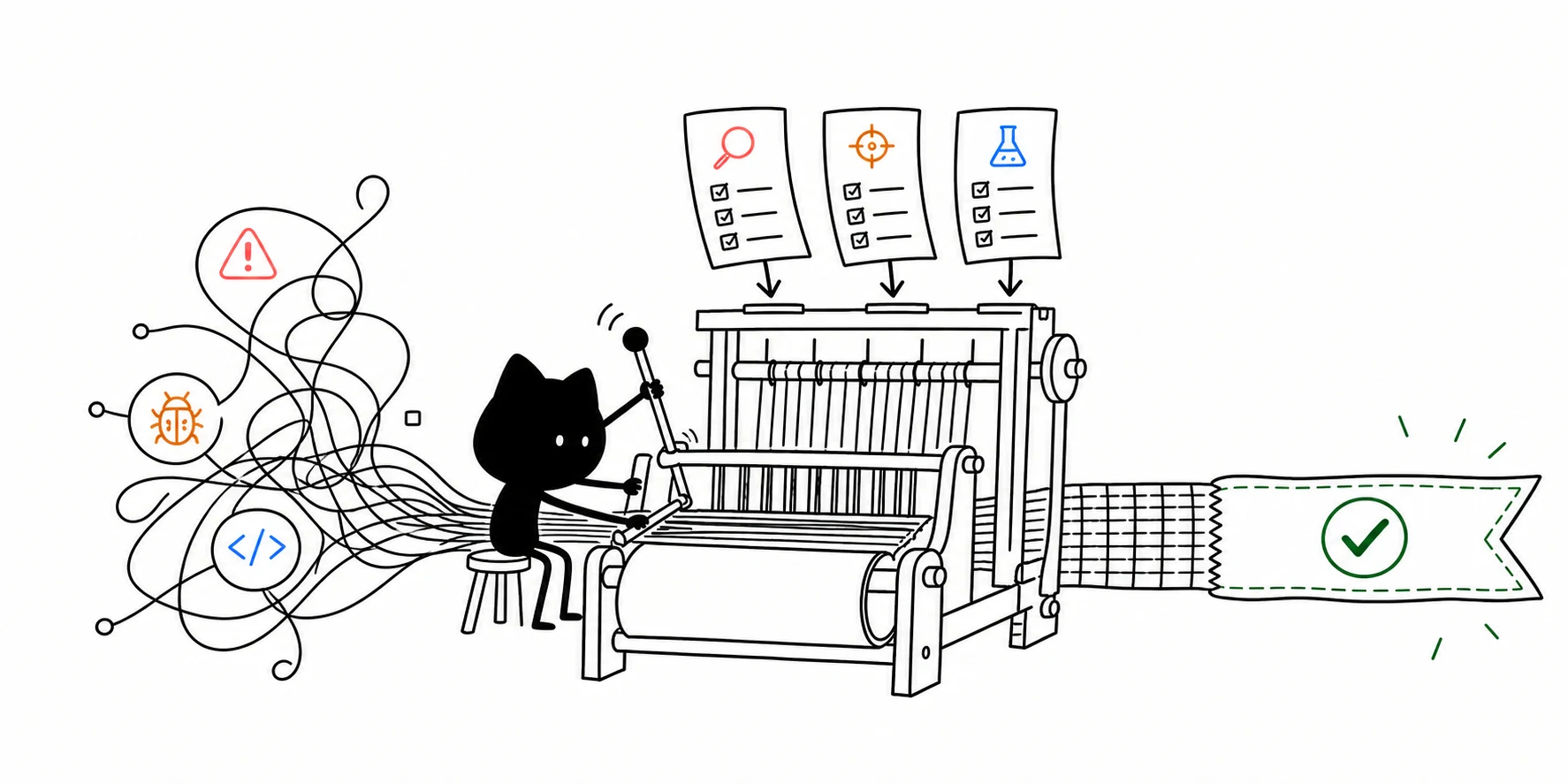
An agent can write plausible code at the wrong boundary, run one convenient test, then report more certainty than the evidence supports. Rootloom changes that sequence.
The error line gets a guard; the component that owns the behavior stays broken.
Reconnect passes while cancellation and clean disconnect quietly drift.
Suggested checks and executed checks blur into the same sentence.
The patch is one step in an engineering decision, not the whole decision.
Ordinary work stays on the repository's normal edit-and-test path. Rootloom supplies the discipline around it.
Inspect source, tests, local rules, and existing work before editing.
Match the workflow to the blast radius and name what should not change.
For a defect, trace the trigger to the boundary that owns the invariant.
Use the repository's architecture and preserve unrelated work.
Exercise the main path, the invariant, and an adjacent path. Name what actually ran.
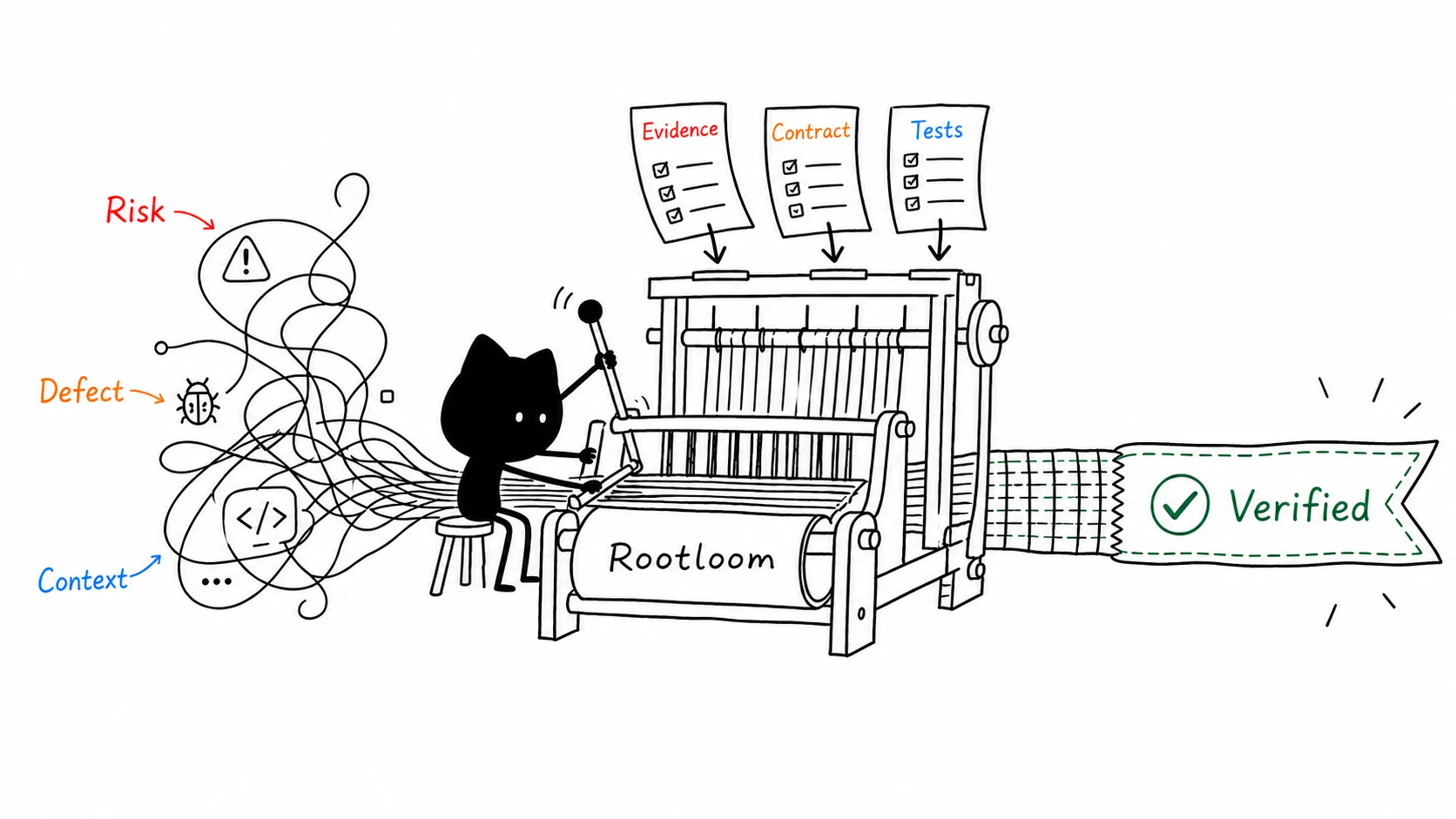
Change routes risk and evidence modes internally, so users choose by intent instead of governance machinery.
$operating-coding-change
Build, fix, or refactor ordinary code with scoped verification.
$operating-code-review
Inspect a diff, PR, migration, or design without changing files.
$project-guidance
Seed, refresh, refine, or validate concise AGENTS.md guidance.
$setup-rootloom
Install, upgrade, inspect, or roll back optional global guidance and Autonomy Rules.
Need a governed change or machine-readable evidence bundle?
$operating-coding-change
loads that mode explicitly and only when needed.
Rootloom keeps plans, command results, repository state, and human judgment as separate facts.
A generated verification command is a suggestion until it actually runs.
Exit code 0 is insufficient when the repository or captured evidence changed.
It makes a review inspectable; it does not prove that code is correct or secure.
A real Rootloom regression passed its command and still failed review because repository state changed afterward.
Read the case studyUse these commands for the complete Codex experience. Agent Plugins-compatible clients can load the three-Skill preview from portable/rootloom; see the preview guide below.
codex plugin marketplace add liyanqing90/rootloom
codex plugin add rootloom@rootloom
$operating-coding-change
Fix the reconnect race and verify reconnect, clean disconnect, and cancellation.
Core installation does not write ~/.codex/AGENTS.md, enable Hooks, install Rules, or install Rootloom Memory.
Rootloom owns the execution and review boundary. Existing engineering tools keep doing their own jobs.